~2B
People lacking key micronutrients
Around 2 billion people lack essential vitamins and minerals such as iron, zinc, iodine and vitamin A.
Source: WHO
Why everyone in the UK should consider vitamin D from October to March, how much to take a day, foods with vitamin D and signs of deficiency.
Last reviewed: October 2026 · How we check our content
(400 IU) a day is the UK recommendation for everyone over 1
UK sunlight is too weak to make enough vitamin D
UK adults has low vitamin D levels (NDNS)
(4,000 IU) a day is the maximum for adults unless advised
Helps the body absorb calcium and phosphate.
Needed for normal muscle function.
Plays a role in normal immune function.
| Food | Portion | Vitamin D |
|---|---|---|
| Salmon | 100 g | ~5–10 mcg |
| Mackerel / sardines / herring | 100 g | ~5 mcg |
| Eggs | 2 large | ~3 mcg |
| Fortified breakfast cereal | 30 g | ~1–2 mcg |
| Fortified spreads or plant milks | Varies | Check label |
| Red meat / liver | 100 g | small amounts |
| UV-exposed mushrooms | 80 g | Varies |
Around 2 billion people lack essential vitamins and minerals such as iron, zinc, iodine and vitamin A.
Source: WHO
Nearly a third of women of reproductive age are anaemic, often due to iron deficiency.
Source: WHO 2023
About 40% of children aged 6–59 months worldwide have anaemia.
Source: WHO 2023
Around a billion people are vitamin D deficient — common in the Middle East despite the sun, due to covered skin and indoor life.
Source: Nutrients reviews
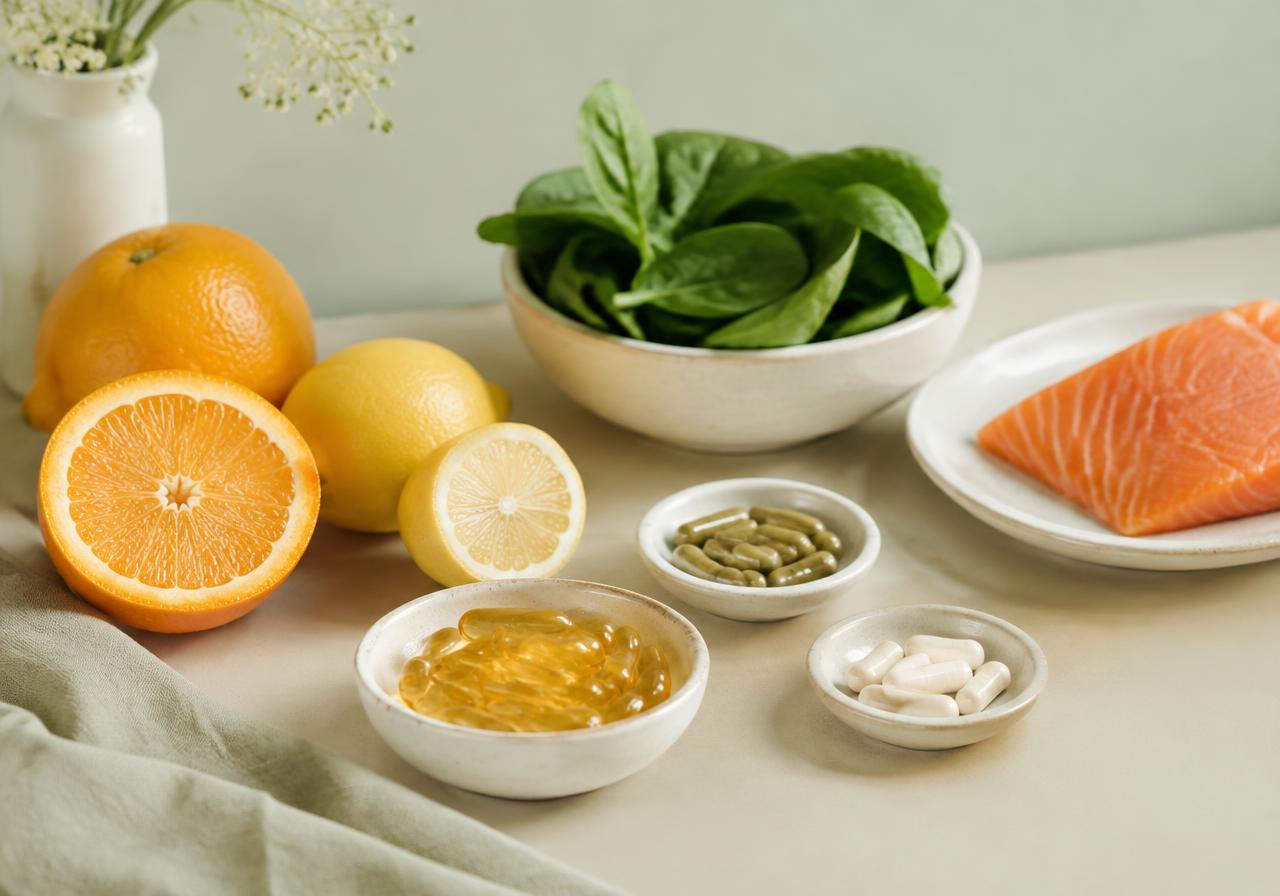
The NHS advises 10 micrograms (400 IU) a day, especially from October to March. Do not take more than 100 micrograms a day without medical advice.
It helps keep bones, teeth and muscles healthy by regulating calcium and phosphate, and supports the immune system.
Oily fish, egg yolks, red meat, liver and fortified foods such as some cereals and spreads. It is hard to get enough from food alone.
General information based on UK public health sources, not medical advice. Speak to your GP, pharmacist or a registered dietitian before major diet changes or starting supplements, especially if you are pregnant, have a health condition or take medication.