<10%
WHO limit for free sugars
Keep free sugars below 10% of daily energy — about 50 g (12 teaspoons) — and ideally below 5%.
Source: WHO 2015
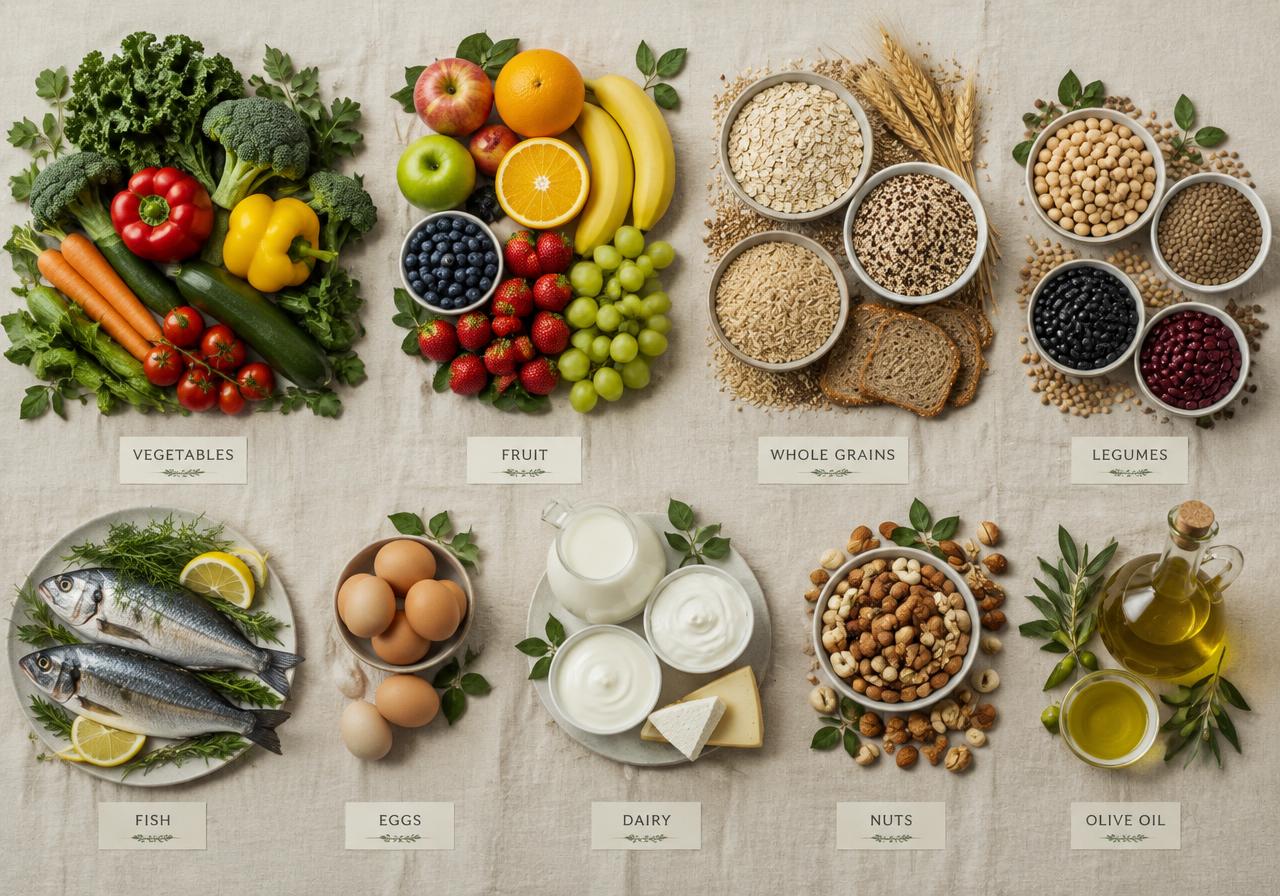
The NHS Eatwell Guide shows how much of what we eat should come from each food group. Here is what each section means, with portion examples and a sample day.
Last reviewed: October 2026 · How we check our content
of what you eat: fruit and vegetables (at least 5 portions a day)
starchy carbohydrates — choose wholegrain or higher fibre
glasses of fluid a day — water, lower-fat milk, sugar-free drinks
portions of fish a week, one of them oily
| Group | Share of plate | Examples |
|---|---|---|
| Fruit and vegetables | Just over a third | Fresh, frozen, tinned, dried; 80 g = 1 portion |
| Potatoes, bread, rice, pasta, other starchy carbs | Just over a third | Wholemeal bread, porridge, brown rice, potatoes with skins |
| Beans, pulses, fish, eggs, meat, other protein | About 12% | Lentils, chickpeas, salmon, eggs, chicken, tofu |
| Dairy and alternatives | About 8% | Milk, yoghurt, cheese, unsweetened calcium-fortified alternatives |
| Oils and spreads | About 1% | Unsaturated oils like rapeseed and olive, used sparingly |
| Meal | What to have |
|---|---|
| Breakfast | Porridge with milk, banana and seeds |
| Lunch | Wholemeal sandwich with egg and salad, an apple |
| Snack | Yoghurt and berries |
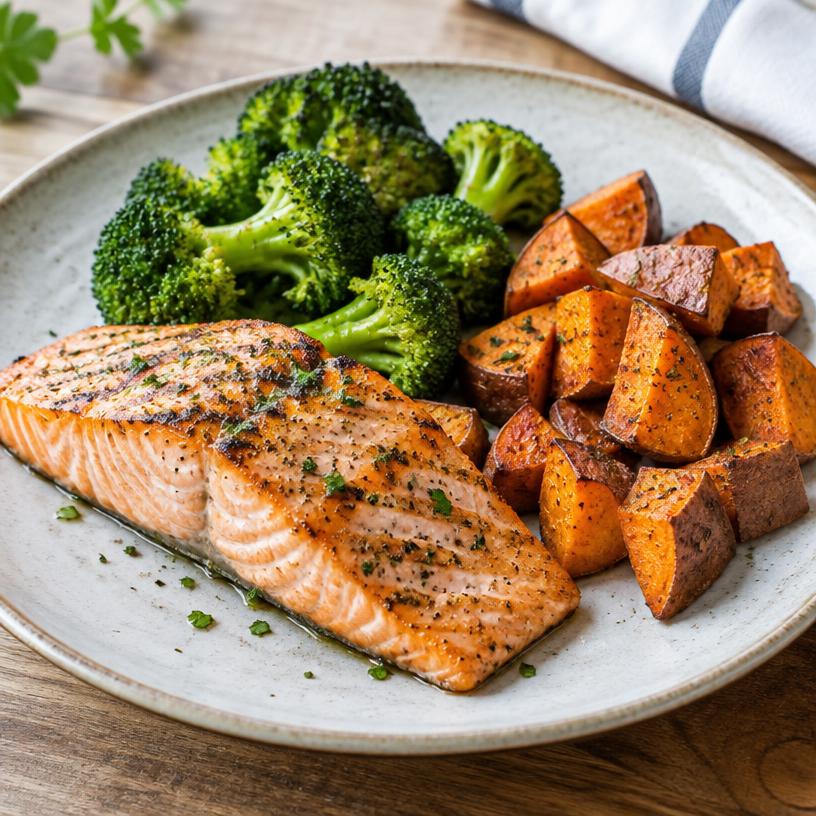
| Dinner | Salmon, new potatoes, broccoli and carrots |
The Eatwell Guide is about balance over a day or week, not every single meal. It applies to most people over 2, but not to those needing special diets.
Keep free sugars below 10% of daily energy — about 50 g (12 teaspoons) — and ideally below 5%.
Source: WHO 2015
A 330 ml can of regular soft drink holds about 35 g of sugar — nearly a full day's limit.
Source: Nutrition labels / WHO
Adults should eat under 5 g of salt (one teaspoon) a day.
Source: WHO 2023
The global average is about 10.8 g a day — more than double the recommended limit.
Source: WHO 2023
It is the UK government's healthy eating model, showing the proportions of food groups that make up a balanced diet.
Fruit and vegetables; starchy carbohydrates; beans, pulses, fish, eggs, meat and other proteins; dairy and alternatives; and oils and spreads.
Most people aged 2 and over, regardless of weight or ethnic origin. Children under 2 and people with medical dietary needs should follow specific advice.
General information based on UK public health sources, not medical advice. Speak to your GP, pharmacist or a registered dietitian before major diet changes or starting supplements, especially if you are pregnant, have a health condition or take medication.