<10%
WHO limit for free sugars
Keep free sugars below 10% of daily energy — about 50 g (12 teaspoons) — and ideally below 5%.
Source: WHO 2015
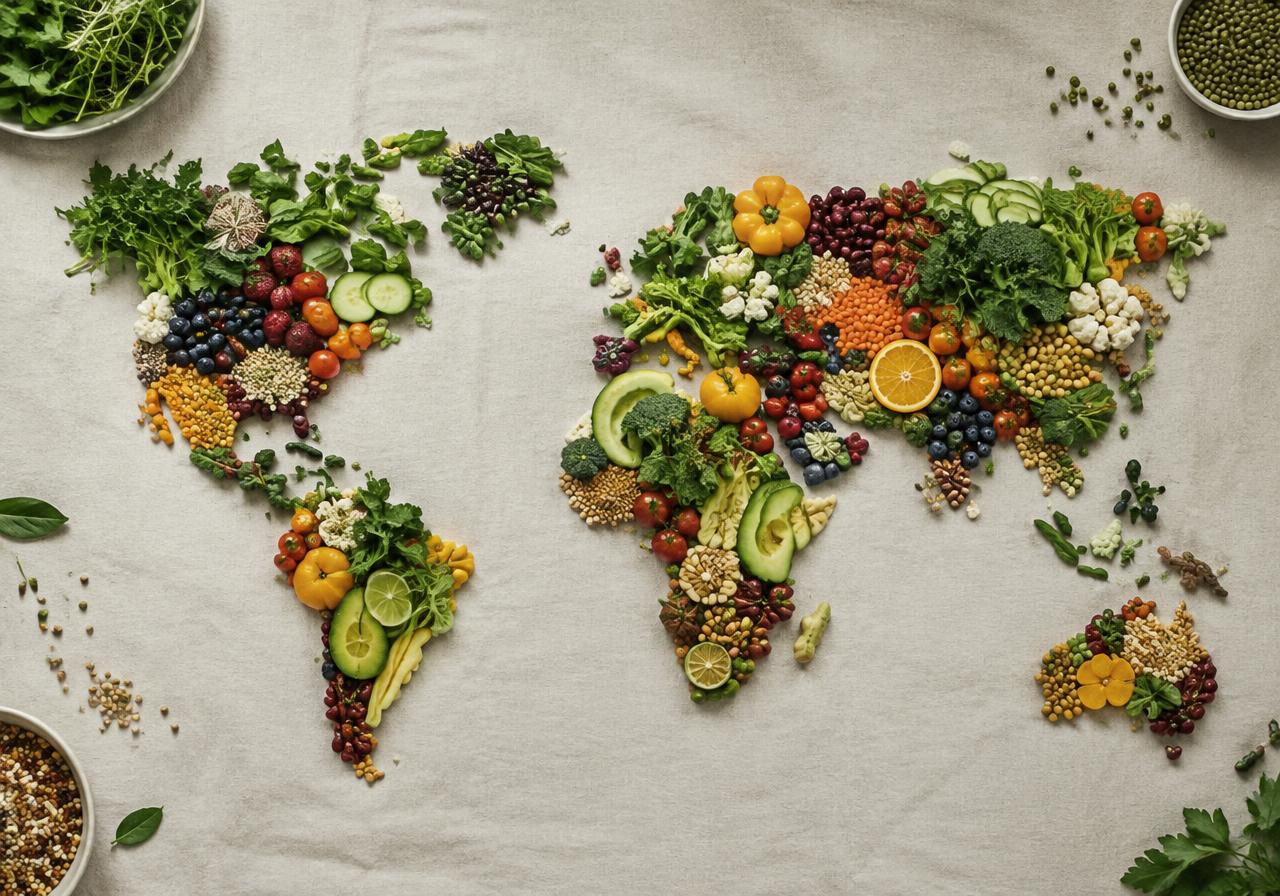
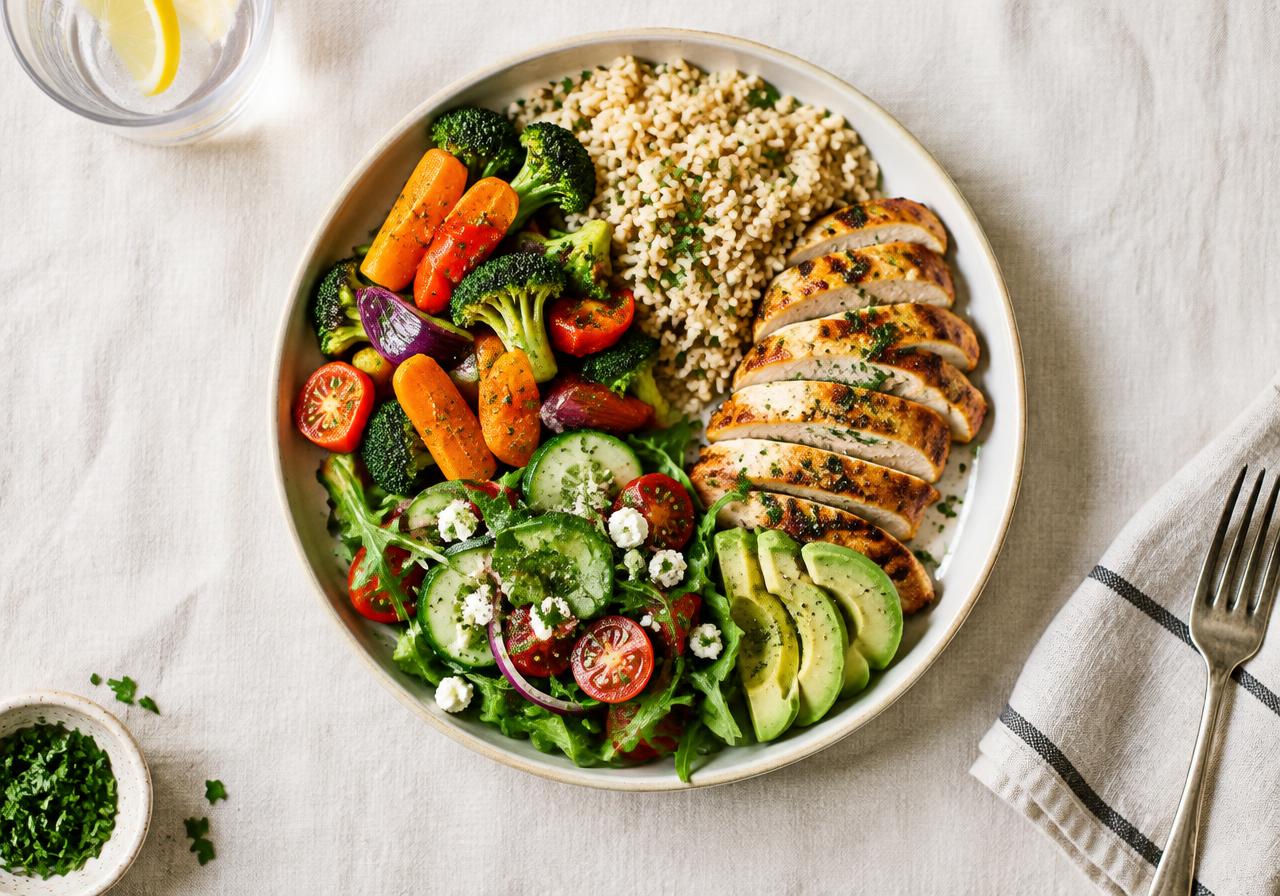
A healthy diet is simple: mostly plants, enough protein, whole grains, good fats and water — with less sugar, salt and ultra-processed food.
fruit and vegetables a day — about 5 portions (WHO)
of daily energy from free sugars, ideally under 5%
salt a day — about one level teaspoon
fibre a day for adults; most people eat far less
Choose a rainbow of colours; potatoes and chips don't count as vegetables.
Brown rice, bulgur, oats, whole-wheat bread and freekeh instead of white, refined grains.
Legumes, fish, eggs, poultry, nuts and yoghurt. Limit red and processed meat.
Olive oil and other plant oils in moderation; avoid trans fats.
Water, unsweetened tea or coffee. Keep juice to one small glass a day.
The plate works best alongside daily movement.
| Meal | Example |
|---|---|
| Breakfast | Oats cooked in milk with berries, cinnamon and walnuts |
| Snack | An apple and a small handful of almonds |
| Lunch | Lentil soup, fattoush salad and one whole-wheat pitta |
| Snack | Plain yoghurt with cucumber and mint |
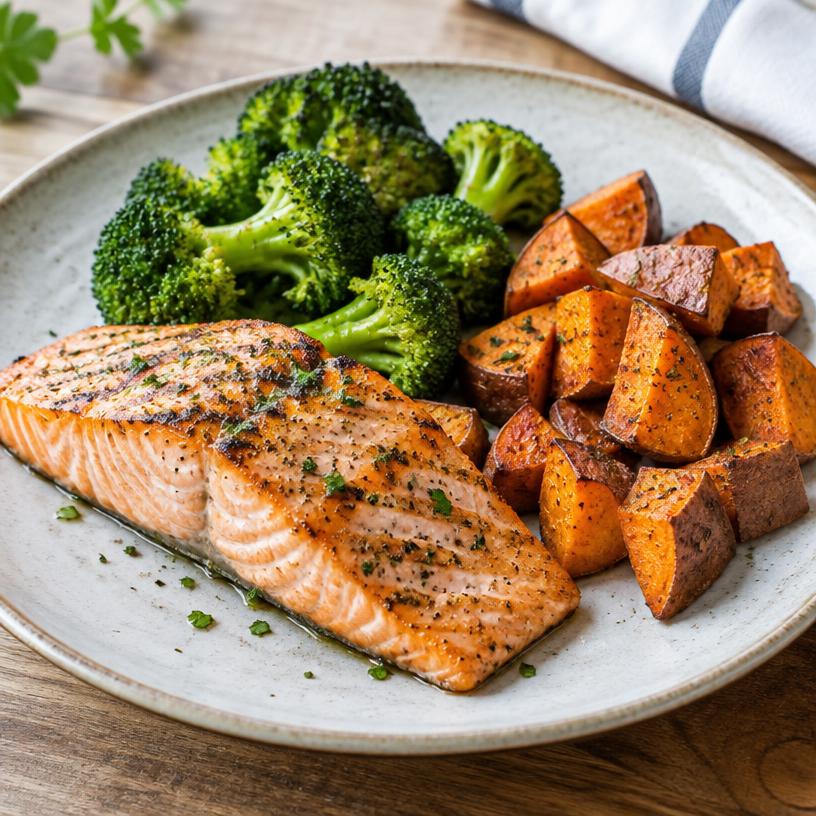
| Dinner | Grilled fish, roasted vegetables and bulgur with olive oil |
| Drinks | 6–8 glasses of water, tea or coffee without sugar |
Aim for healthy choices most of the time. A diet that leaves room for favourite foods is far easier to keep for life than a strict one.
Keep free sugars below 10% of daily energy — about 50 g (12 teaspoons) — and ideally below 5%.
Source: WHO 2015
A 330 ml can of regular soft drink holds about 35 g of sugar — nearly a full day's limit.
Source: Nutrition labels / WHO
Adults should eat under 5 g of salt (one teaspoon) a day.
Source: WHO 2023
The global average is about 10.8 g a day — more than double the recommended limit.
Source: WHO 2023
General information based on public health sources, not medical advice. Talk to a doctor or registered dietitian before major changes, especially if you are pregnant, have a health condition or take medication.