400 g
Fruit & veg per day
WHO recommends at least 400 g (five portions) of fruit and vegetables daily.
Source: WHO 2020
What each food group gives your body, good examples, and roughly how much to eat each day.
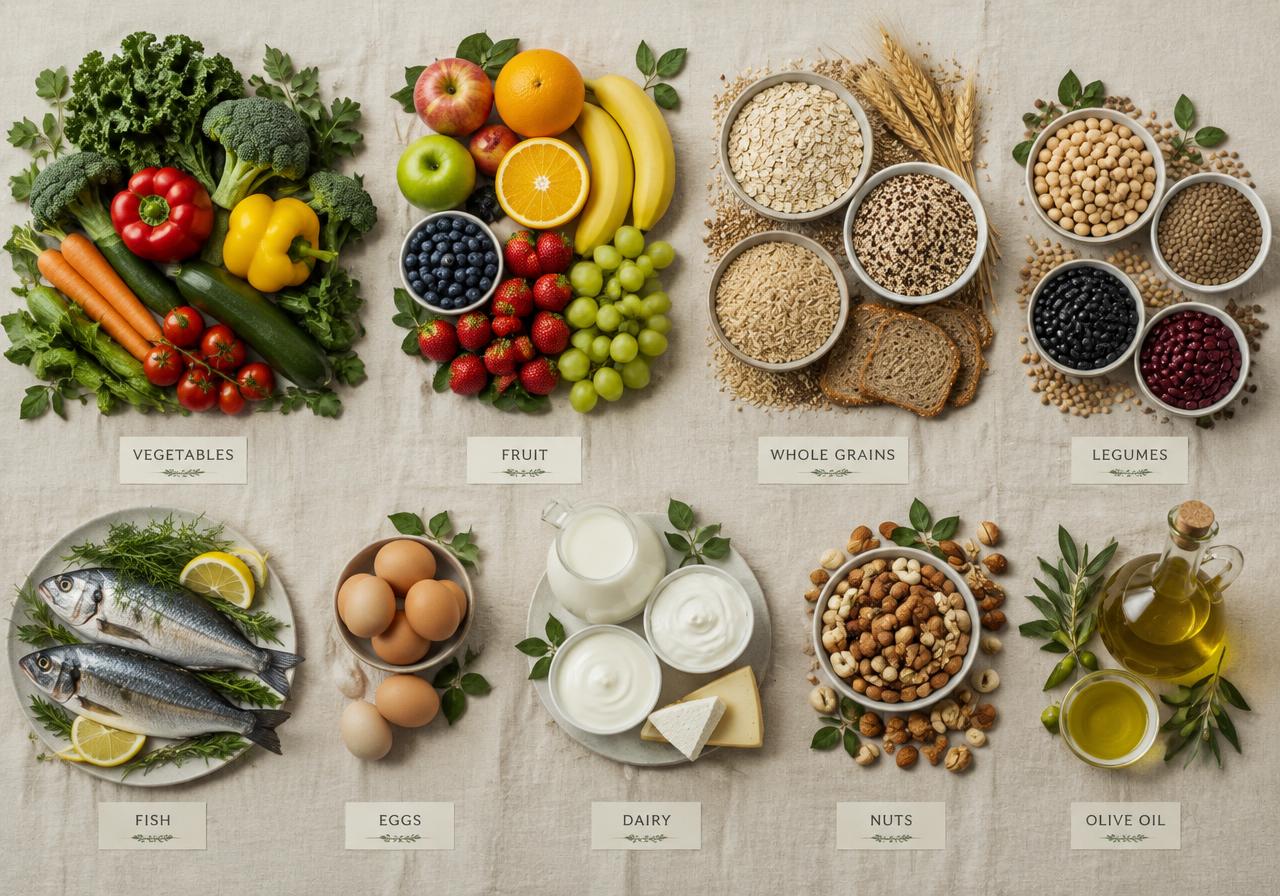
fruit and vegetables a day (WHO)
fibre a day is a common adult target
colours of produce to aim for each day
legumes a week or more is a cheap protein boost
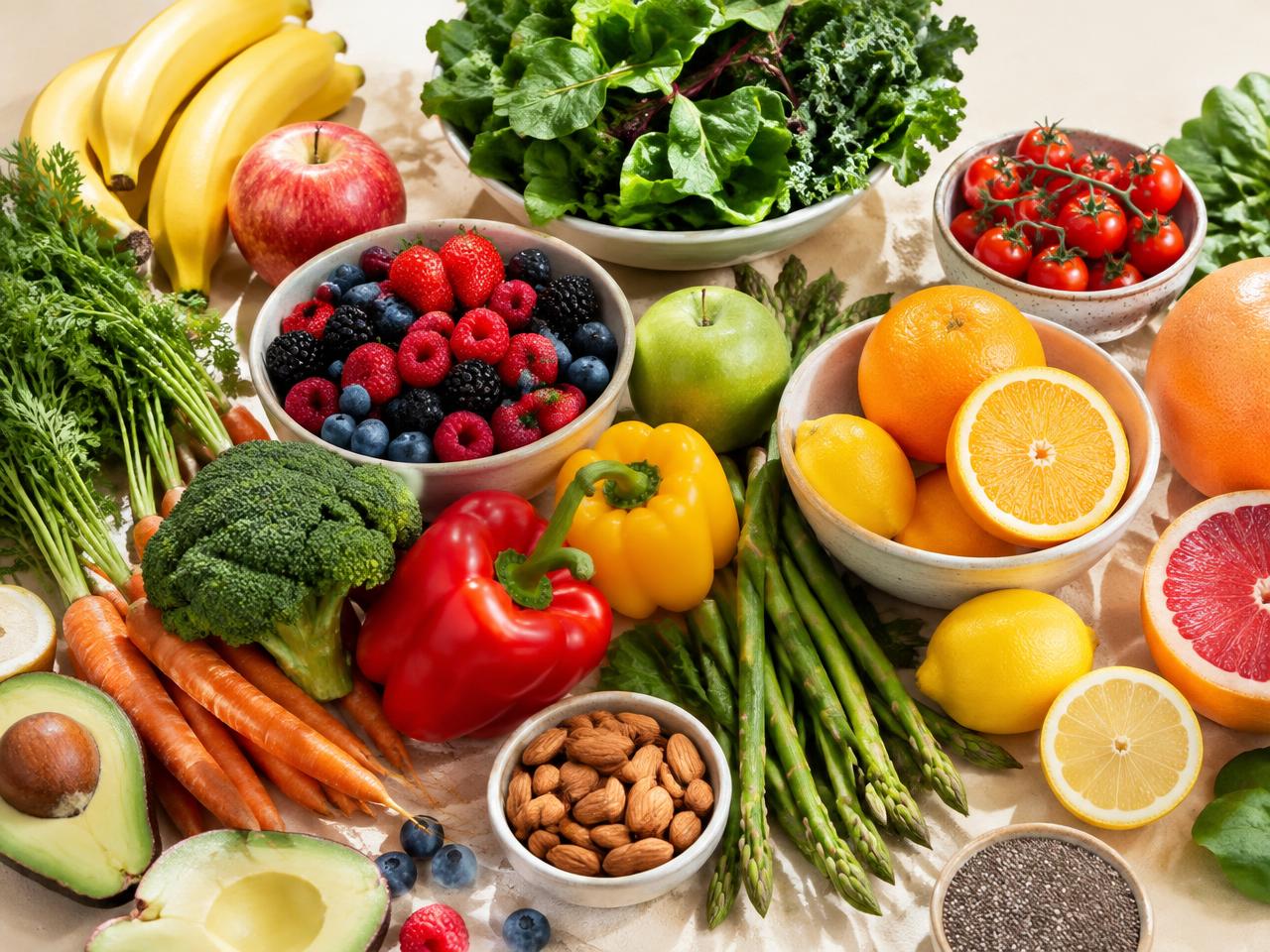
Fibre, vitamins A and C, potassium. Leafy greens, tomatoes, carrots, peppers, courgette.
Vitamin C, fibre, antioxidants. Apples, oranges, berries, bananas, dates.
Energy, fibre, B vitamins. Oats, brown rice, bulgur, freekeh, whole-wheat bread.
Muscle repair, iron, zinc. Lentils, chickpeas, beans, fish, eggs, chicken.
Calcium, protein, vitamin D. Milk, laban, yoghurt, labneh, cheese, fortified drinks.
Heart health, vitamin absorption. Olive oil, nuts, seeds, tahini, avocado, oily fish.
Frozen vegetables and fruit are frozen soon after harvest and keep most of their nutrients — they are a cheap, healthy option.
WHO recommends at least 400 g (five portions) of fruit and vegetables daily.
Source: WHO 2020
Low fruit and vegetable intake was linked to about 3.9 million deaths in 2017.
Source: WHO
Too few whole grains was the leading dietary risk for death worldwide, ahead of sugar.
Source: GBD, The Lancet 2019
Adults should get at least 25 g of natural fibre a day from vegetables, fruit, legumes and whole grains.
Source: WHO 2023
Serving guides are general adult averages; needs vary with age, size and activity.